The Journey: From a $50 Beater to Tech-Art Mastery
– Map Of Contents
Started from a $50 drum kit: DrumMania gaming $\rightarrow$ Modding a full-sized drum kit $\rightarrow$ Fencing $\rightarrow$ DDR (Dance Dance Revolution) $\rightarrow$ Mapping drum beat charts $\rightarrow$ Producing in Logic Pro $\rightarrow$ The Final Boss: A mashup of Machine Learning, Code, Design, and Media Art.
I’ve previously written a bit about my journey—how I bought a cheap drum kit just to play DrumMania and somehow ended up spiralling into a full-on data analytics deep dive into drum acoustics. This post is about the “omake” (extra) bits: the story before and after, the technical grit of building the kit, and how this drumming rabbit hole ended up bleeding into all my other side tracks.
I actually did a summary of this in my first-ever YouTube video.
The video… well, I was too bloody shy to use my real voice, so I published it with StarCraft Protoss sound effects… lol… hahaha. But that’s actually a perfect example of how one thing leads to another; learning Logic Pro (DAW) to expand my e-drum setup ended up giving me the SFX editing skills I needed. One activity, a dozen different branches.
Growth and Learning Aren’t a Straight Line.
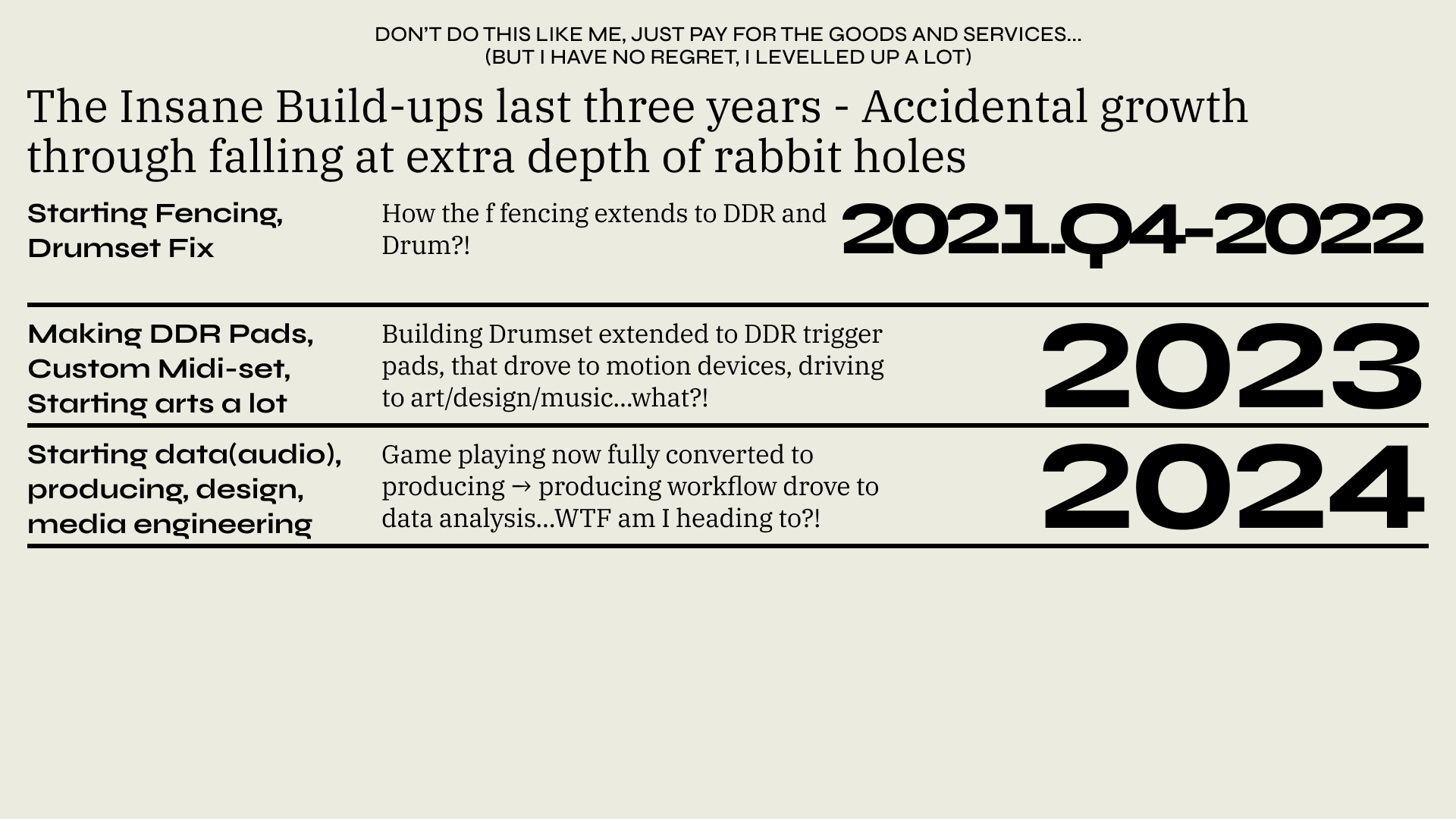
This post mainly covers my progress from 2022 to the end of 2024.
I posted a short version on YouTube. Again, I was too cringed out to use my raw voice, so I scripted it and ran it through a Protoss voice effect in Logic Pro… but thinking back, that’s actually more embarrassing, isn’t it? I’ll probably upload a raw voice version later (…)
The chronological records from that time are in my “Retro Review” posts. I haven’t kept the timeline perfectly linear here, mostly for my own sanity while writing.
The point I’m trying to make is that when you’re carving out your own path, growth is never linear. I started taking on all sorts of challenges in late 2021, and I want to look back at the last three years.
I tried to start writing about how I got into drums and DDR, beginning with fencing of all things, and I actually teared up a bit. My life just flashed before my eyes and it gave me a proper heart-squeeze. Dreams I’d tucked away as a kid 20 years ago tried to sprout during uni, but then I graduated from art school, hit the wall of a brutal job market, and those sparks died out while I scrambled just to survive. Then, I moved to Australia to start a new life.
Then, my long-term partner suddenly called it quits. I was left alone in a foreign country. I’m an Aussie citizen now, but I’m still a Korean-born-and-raised “outsider” who feels a bit out of place even when I go back to Korea. That’s me.
I’d relied on my partner so much because I loved him, but you can’t control how someone else feels. The person I thought I’d be with forever didn’t want to live with me anymore.
Just like that, it was over. Empty. And right as we split, the COVID-19 pandemic hit, and Australia went into those hardcore lockdowns.
I became isolated from the world. In that isolation, I had to face my own miserable self, head-on.
Look, that sounds grand and all, but I actually reckon I was pretty lucky.
Despite a year of lockdowns, I didn’t lose my job. The lockdowns actually gave me the space to find the “me” I’d forgotten about.
In 2021, the pandemic gifted me this unexpected isolation. Bored out of my brain in an empty room, I started looking for new hobbies, and one of them was playing an instrument.
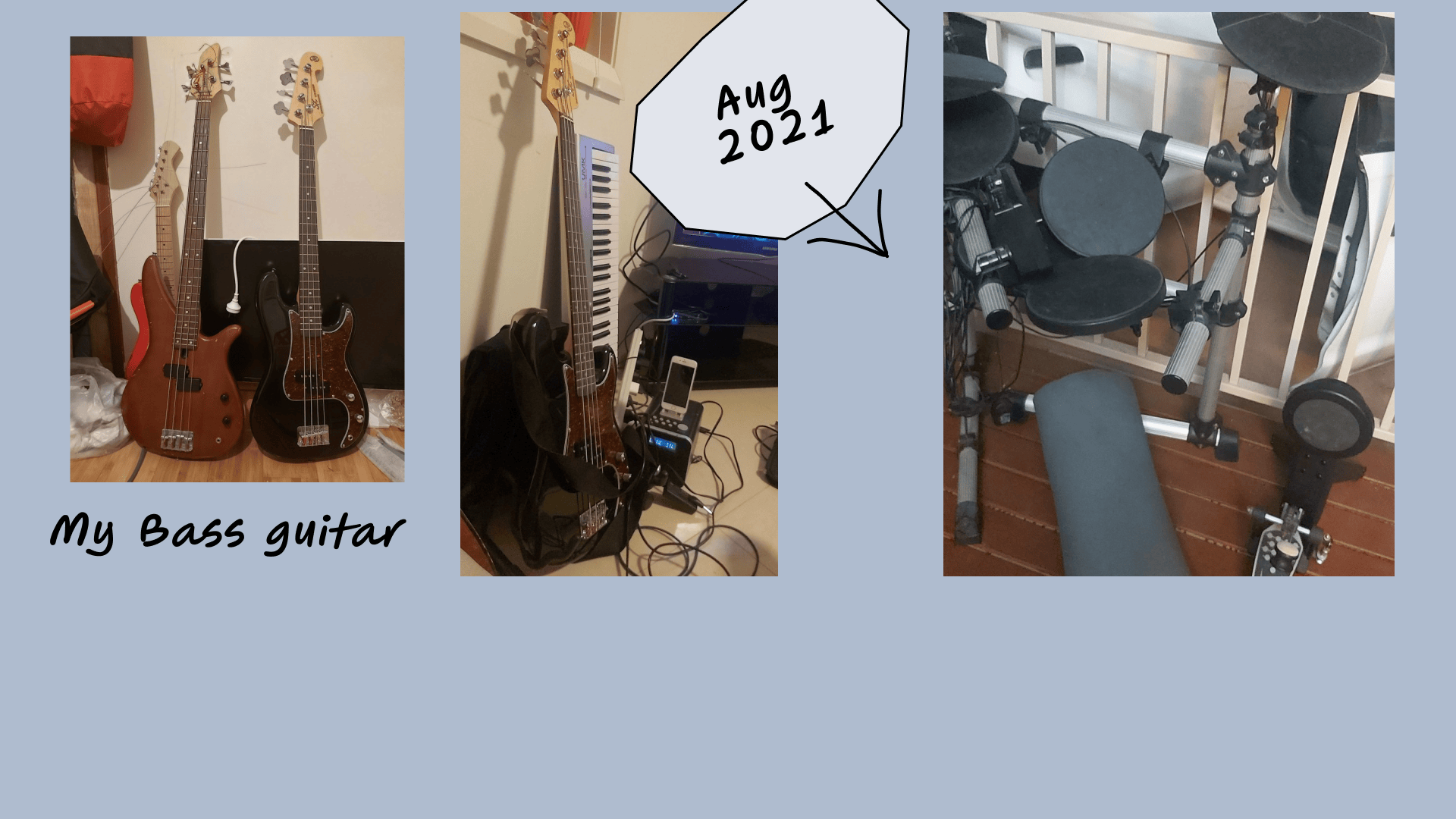 How the hell did my interest jump from Bass to Drums? lol
That led to me buying a $50 piece of junk drum kit and “Frankensteining” it into a Mega Drum kit…
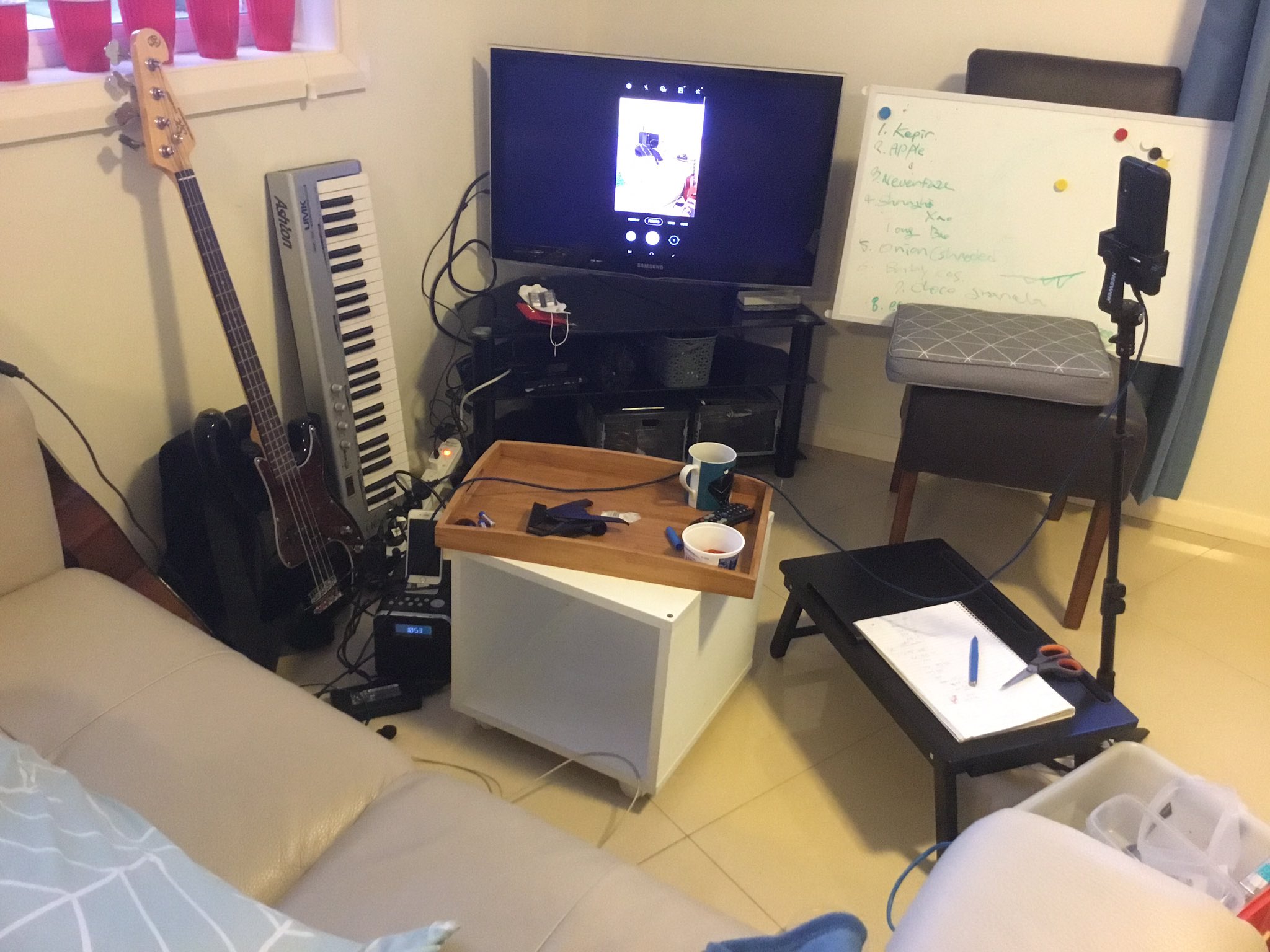
It started with me dusting off the bass guitar I’d learned as a kid, just messing around. But that musical itch eventually spread to the drums.
How $50 Changed My Life
Once I had a bigger place to myself, I had this impulsive urge to play drums as loud as I wanted without worrying about the neighbours. That was the start of my weird relationship with a $50 second-hand electronic kit.
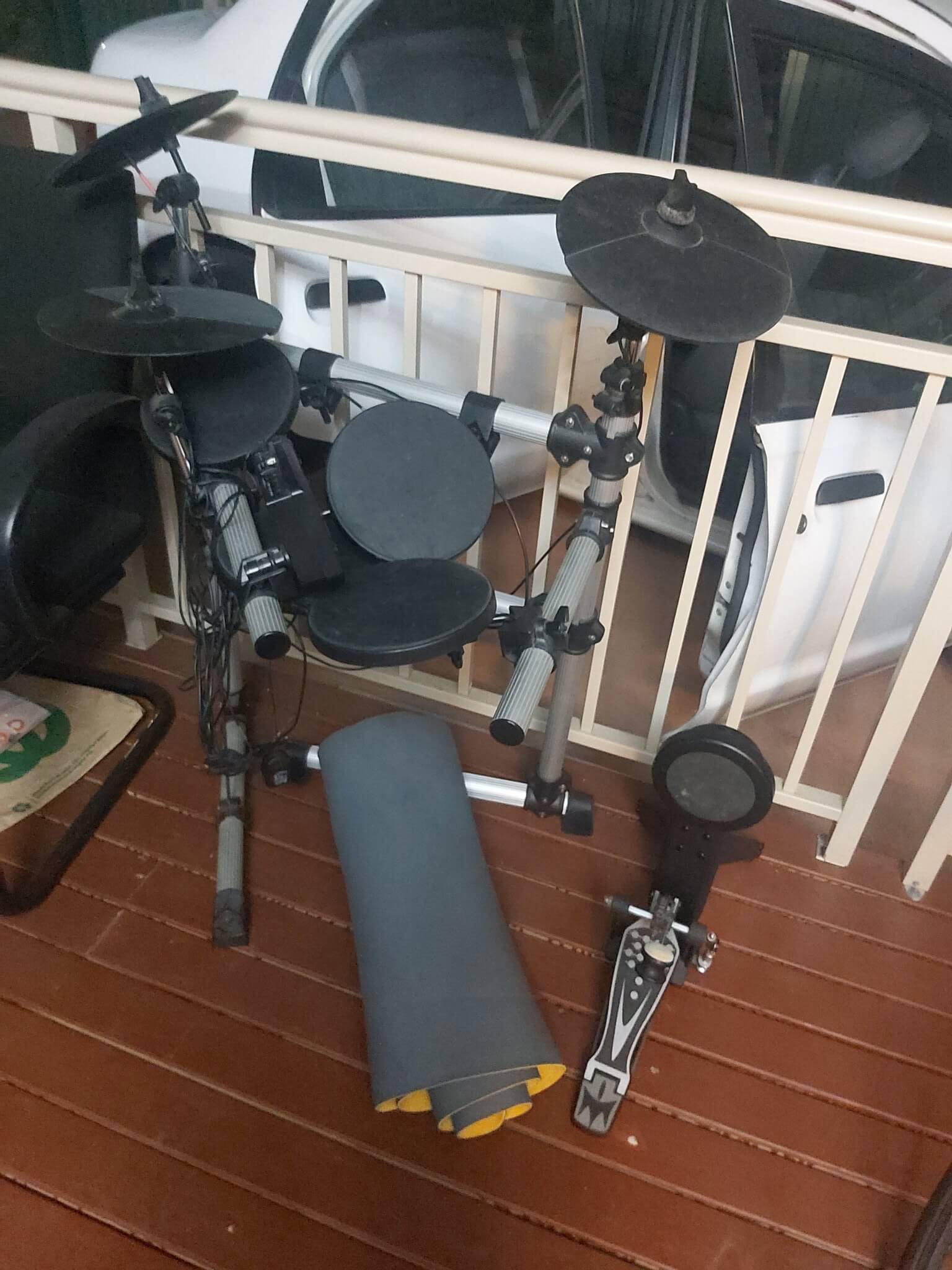
It was in shocker condition, but I couldn’t complain for fifty bucks. In September 2021, I decided to fix it. I spent my time soldering and messing with circuit boards for the first time in my life.
I was diagnosed with ADHD in late 2021, and my head was a mess. Dealing with a breakup after all those years and then getting a “final” diagnosis for the ADHD I’d always suspected… I didn’t know how to handle it, so I just kept expanding my interests. I was trying to survive, in a way.
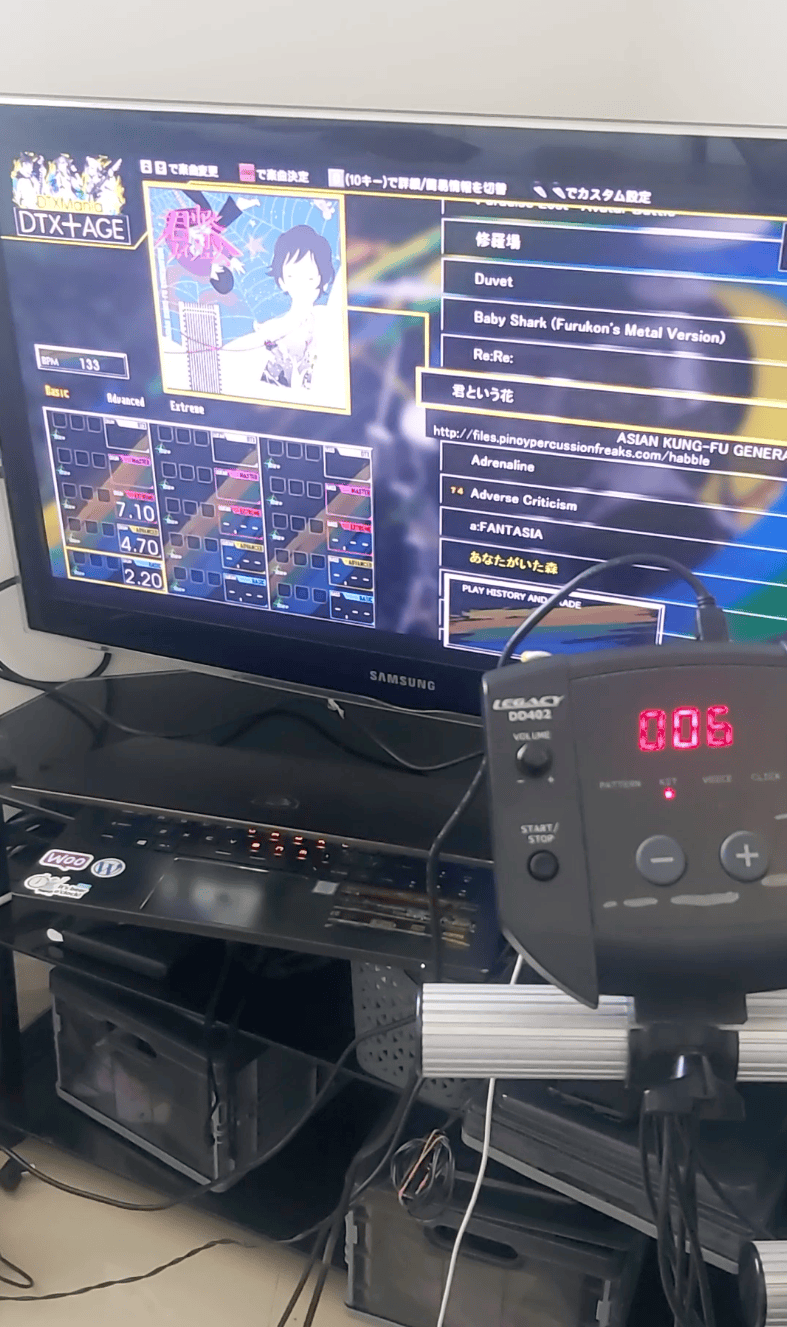
I started playing DrumMania (DTXMania) with that fixed-up kit.
I remember being happy just to be able to play DTX back then… (Me in Sept 2021)
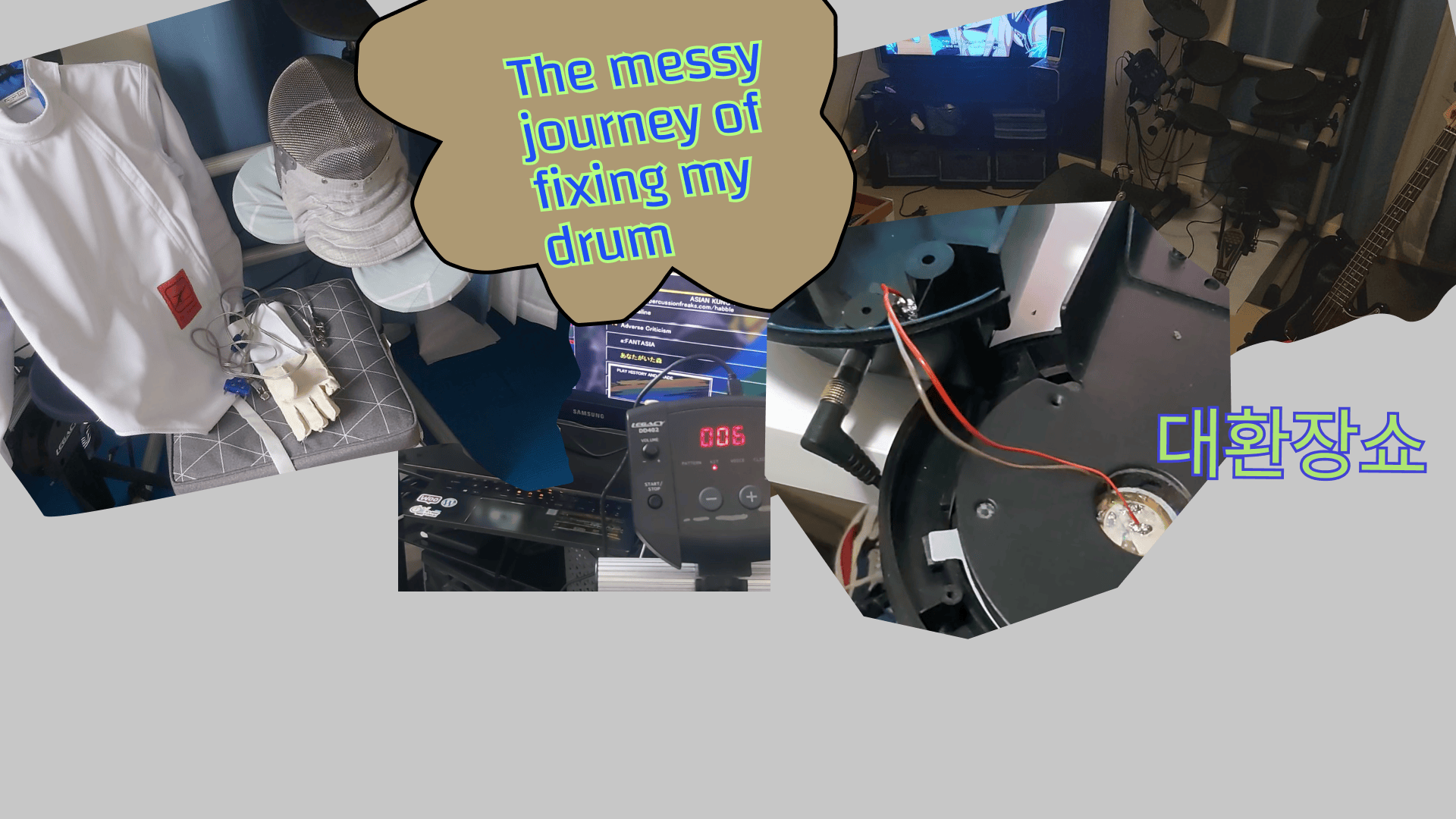
If late 2021 was when I started thinking about who I really am, 2022 was when I started planting the seeds to actually find out.
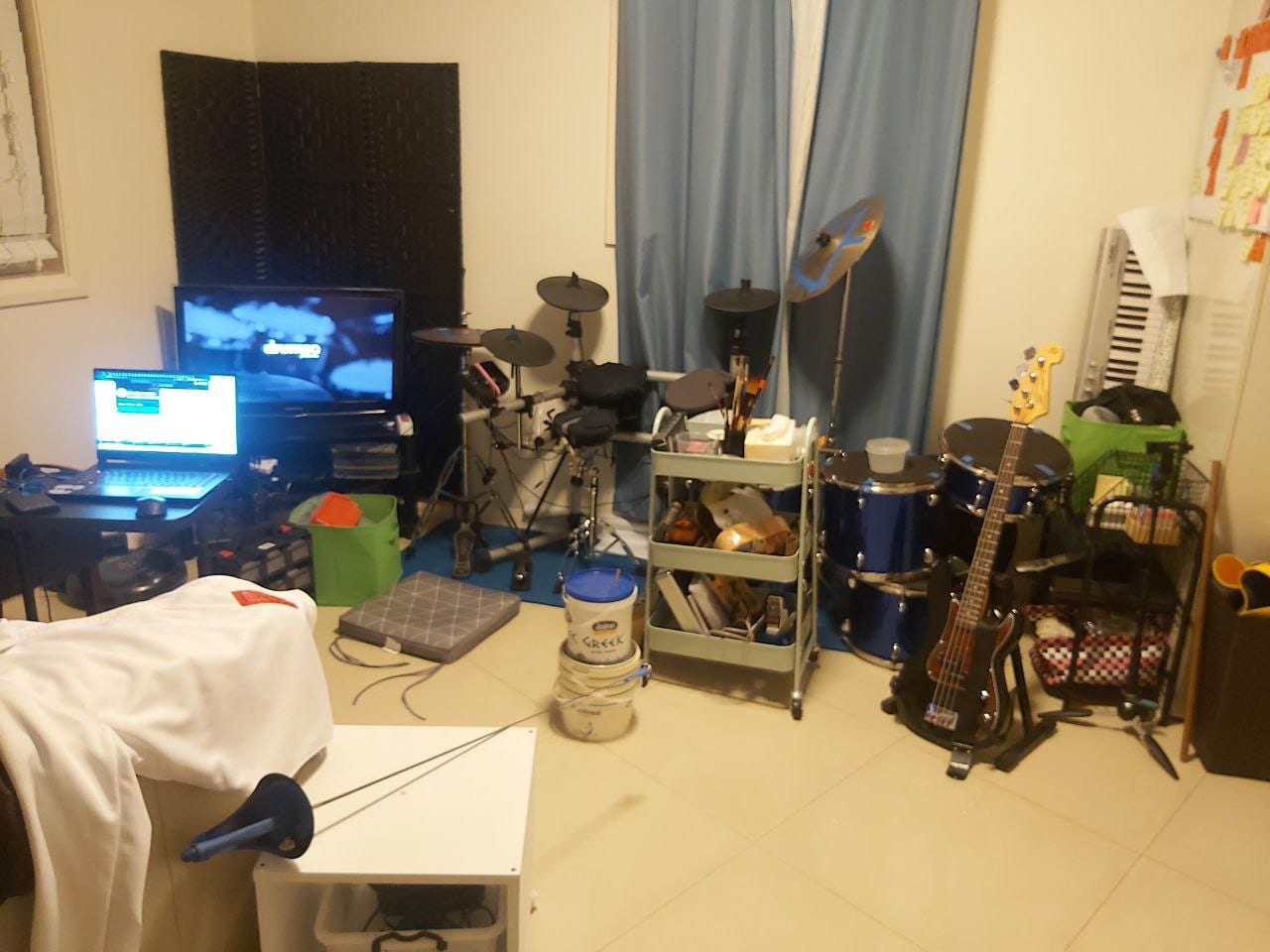
I finish fixing the junk drums, start playing DrumMania, then suddenly… Fencing? Wait, what?
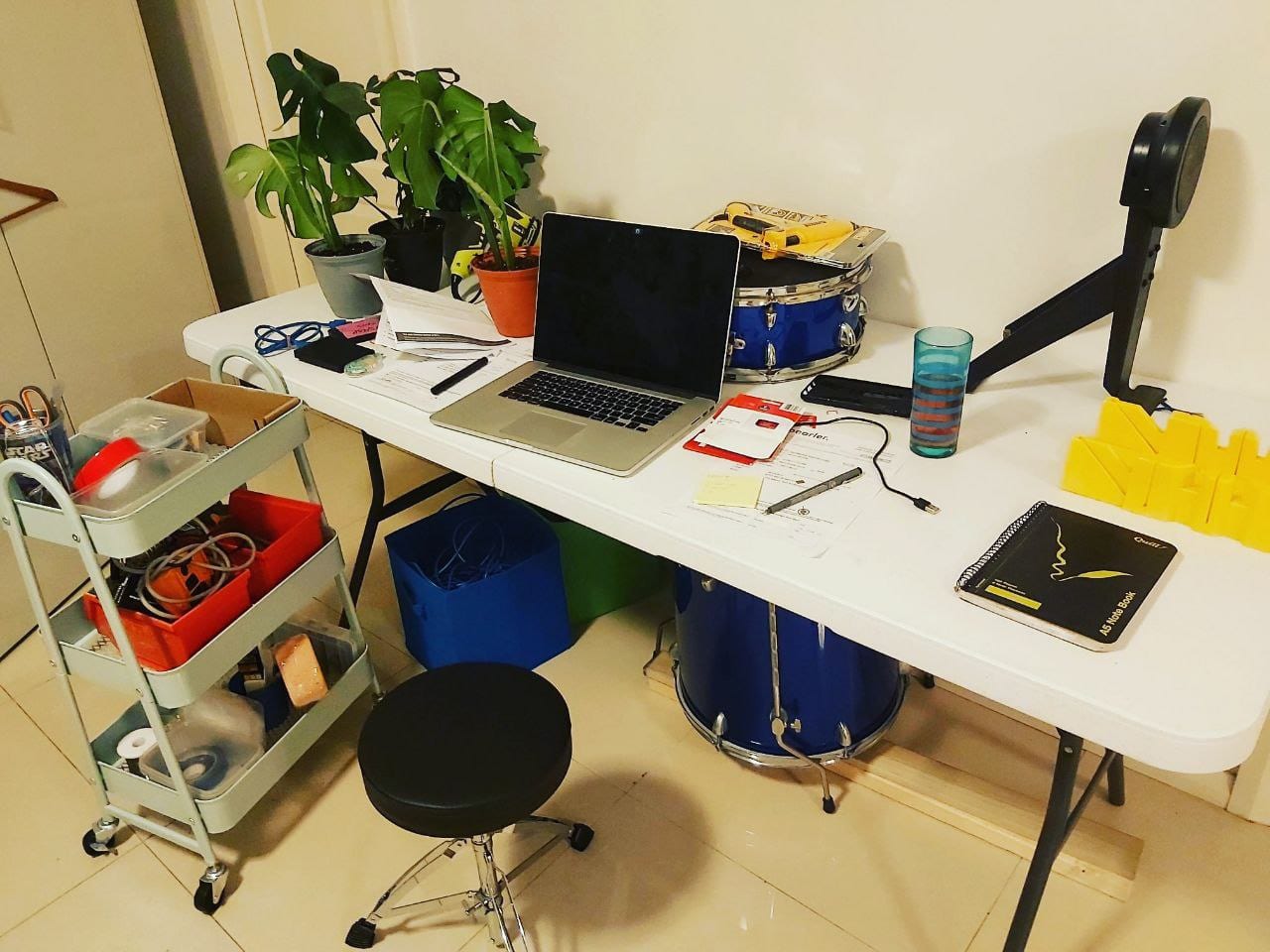
I don’t know what I was thinking, but here’s everything I blabbed about starting over 2022-2023. I’m a real piece of work, honestly…
Anyway, fencing. I wanted to train my cardio and leg strength at home for fencing, so I bought a cheap DDR pad off eBay. It broke after one go. Getting the emulator and PC settings sorted was already a massive pain in the arse—the universe was really taking the piss at that point.
I eventually moved from the small rubber trigger pads to a custom e-kit made from acoustic drums for better feel. That whole miserable journey is documented here (bring tissues): EN-DIY-Converting the acoustic drumkit to e-kit-pt1
While I was turning the cheap e-kit into an Acoustic+Electronic “Frankenstein” custom, I picked up some hacky skills in circuitry and soldering. I figured I might as well try to fix that busted vinyl DDR pad from eBay too.
Like this. Lol.
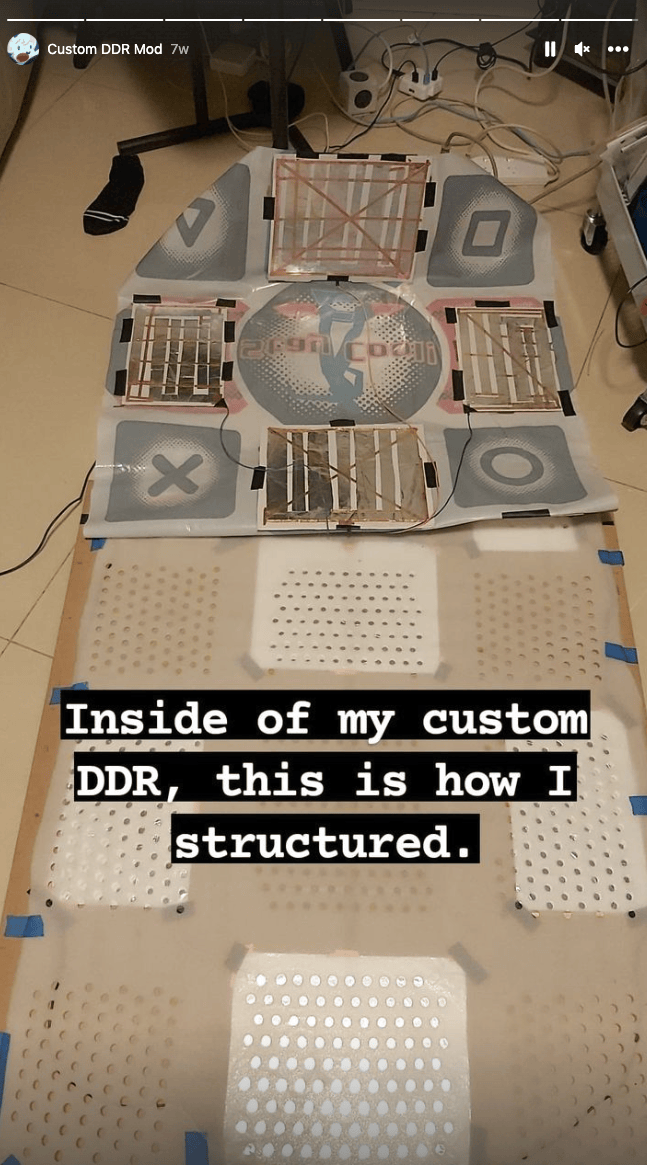
This is me making the first prototype, reverse-engineering the circuit board and testing triggers made out of aluminium foil (yeah, the stuff from the kitchen). That whole process is here: EN-DIY-Making a DDR mat out of the cheap eBay soft pad
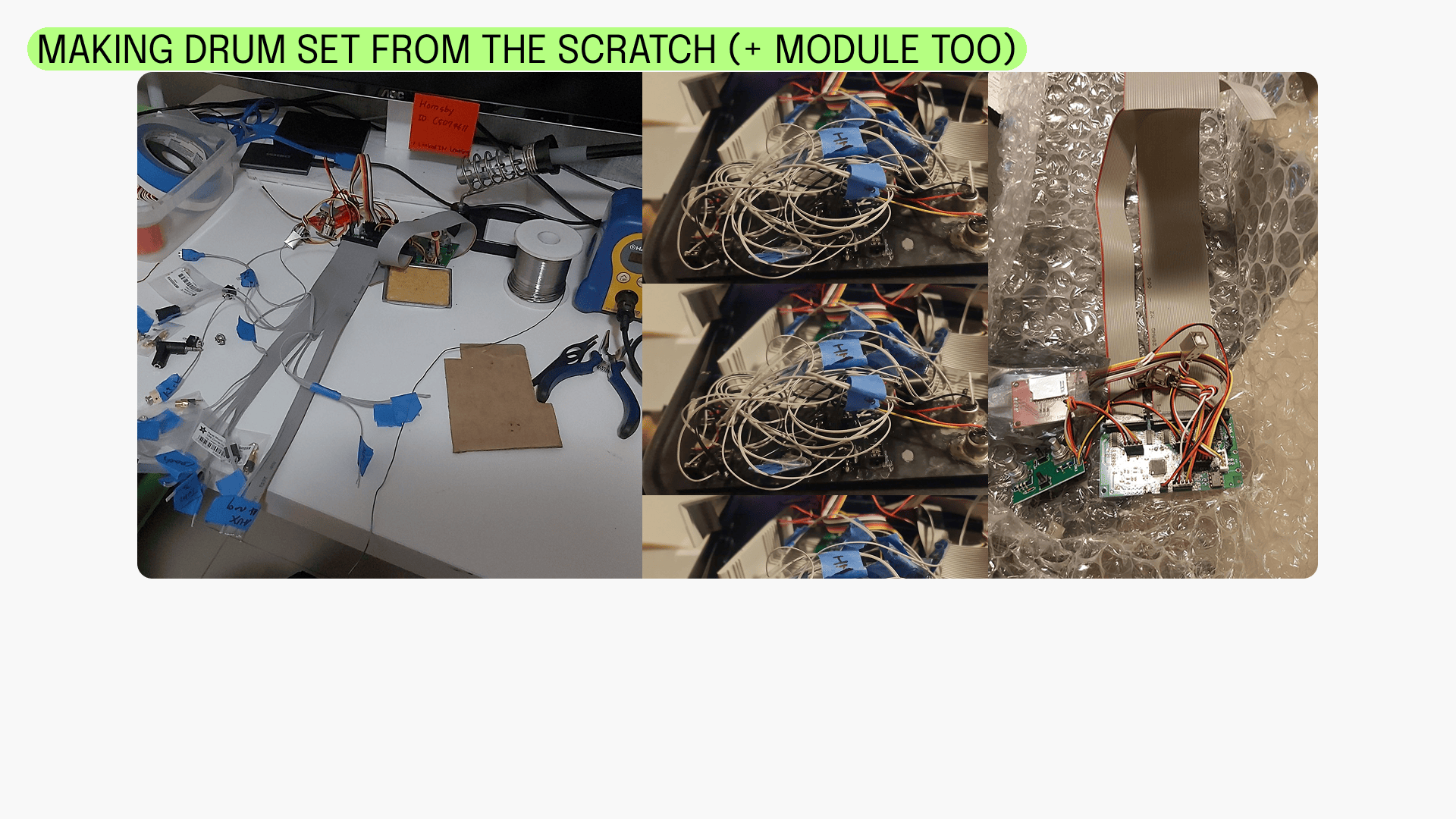
So, yeah. That happened. All those years crying over soldering irons and parts to build this “MegaDrum”… lol ㅠㅠ The timeline for the birth of Frankenstein (which took nearly a year of stubborn modding) is in these three posts:
2022-08-14-hallyucon-astro-kai-oh-my-girl-soldiering-megadrum
2022-08-15-Megadrum-soldiering-battle
KR-DIY-The Transforming Journey of my Franken
I still feel like tearing up looking at these… lol.
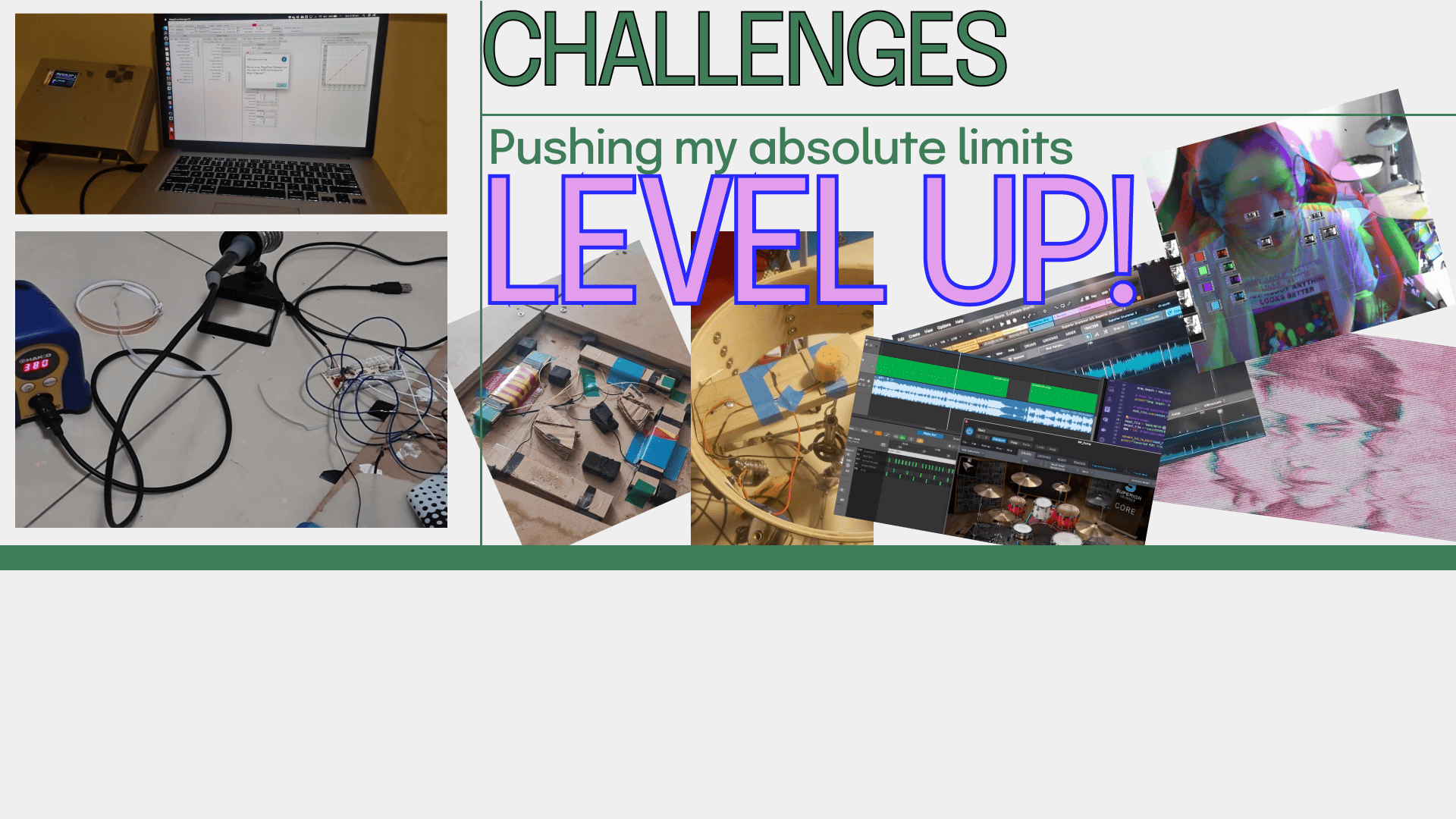
The reason the acoustic-to-digital conversion took so long was the constant iteration. Play the kit -> notice the timing is off or a trigger fails -> reinforce it -> play for a while -> sensitivity goes to shit -> 2nd reinforcement. Lather, rinse, repeat. Because I was constantly repairing, reinforcing, and “testing” (read: playing violently), I accidentally got decent at it, which helped when I modded the DDR pad too.
I upgraded the DDR to a double pad, got more “cheating” skills, and eventually built a proper case for the MegaDrum brain. It was an endless cycle: Drum mod -> DDR mod -> Drum upgrade -> testing e-drums with DAWs and VSTs -> DDR upgrade again.
This madness peaked between Dec 2022 and April 2023. Honestly, even I think I’m a bit much. After that, uni work and moving house took over, so I parked the projects until Oct 2023.
An Unexpected Journey of Dominoes
flowchart TD
    A["50달러 중고 드럼<br/>(2021.09)"] --> B["🔧 납땜 & 기판 수리<br/>생전 안해본 거 도전"]
    B --> C["드럼매니아 게임<br/>(DTX매니아)"]
    C --> D["드럼 세트 고장<br/>더 좋은 걸로 업그레이드 욕심"]
    D --> E["어쿠스틱 드럼 80달러<br/>전자드럼으로 개조 시작"]
    E --> F["메가드럼 모듈 제작<br/>인생 최고 난이도 도전"]
    F --> G["DAW 학습<br/>GarageBand → Ableton Live"]
    G --> H["VST, 미디 맵핑<br/>오디오 엔지니어링"]
    H --> I["파이썬 오디오 분석<br/>자동 드럼 차트 생성 시도"]
    I --> J["데이터 사이언스<br/>머신러닝 수업"]
    J --> K["웹 애니메이션<br/>GSAP, Three.js"]
    K --> L["비상계엄 이후<br/>정치적 웹 컨텐츠 제작시작"]

    classDef start fill:#e1f5fe,stroke:#01579b,stroke-width:3px
    classDef tech fill:#f3e5f5,stroke:#4a148c,stroke-width:2px
    classDef creative fill:#e8f5e8,stroke:#1b5e20,stroke-width:2px
    classDef failure fill:#ffebee,stroke:#b71c1c,stroke-width:2px

    class A start
    class B,E,F,G,H tech
    class C,I,J,K,L creative
    class D failure
I tried so many things. Fencing out of nowhere, then DDR for fencing leg-strength, then breaking the $35 eBay pad and modding it.
Here’s a video of me playing as a total noob on my fixed drums in Feb 2022.

I was playing while learning programming to understand the drums better. But because I was playing with so much “passion,” the kit started falling apart. That cheap kit couldn’t handle double bass and didn’t allow for extra cymbals. I wanted to expand.
So, I bought an acoustic kit for about $80 and decided to convert the whole thing to digital. And since I had all these leftover pads and triggers, I ditched the cheap drum module and started building my own.
MegaDrum: The Final Boss of My Life
I had no bloody clue building a MegaDrum would be this hard. It was the most difficult “piece of shit” I’ve ever dealt with.
I’d never soldered, never touched a PCB, and knew zero about electronic signal processing. Building a drum module from scratch was a whole different league.
I finally finished the soldering in late 2022, designed the case, and by late 2023, I actually got the thing running.
From DAWs to Python: The Endless Learning Curve
Building the MegaDrum taught me that since it’s a pure MIDI controller, I needed to understand Digital Audio Workstations (DAWs) to actually test if the triggers were working.
I started with GarageBand, then moved to Ableton Live to tune the MIDI signals and sound setup. Learning Ableton took ages.
The MegaDrum project wasn’t just a hobby; it was a limit-testing challenge. A complete amateur who couldn’t solder ended up self-teaching PCB circuits and signal processing. It was a series of failures and errors, but when I finally got it working, I felt this massive sense of self-efficacy. It gave me the guts to try anything else.
Then came VSTs and MIDI mapping. I hit signal drop-out issues, which forced me to dive deep into MIDI tools. That led me into a bit of audio engineering and producing.
I used those skills to try and make drum charts for Clone Hero.
First Encounter with Python: A “Successful” Failure
I initially tried using Python to check audio and find transients, thinking there might be a model for auto-transcribing drums.
Spoiler: It failed.
However, the problem-solving skills and the understanding of Python dependencies I gained back then were a lifesaver for my Data Mining class in late 2024.
Since auto-transcription failed, I went manual. I realized then that ChatGPT or Claude couldn’t solve everything for me. I had to master the base tools—Guitar Pro, Logic Pro, etc. I practiced editing by converting YouTube covers and Songsterr tabs. I made Clone Hero charts for Love Rocket (Slam Dunk) and Zezeregam by 10-FEET. Being a Mac user made it hard (most tools are Windows-based), but I managed to extract MIDI and convert it using midi.js.
The Struggle with Google Colab: Dependency Hell
I tried the audio-to-drum-map thing again, trying to extract kick, snare, and hi-hat info at specific BPMs to convert text to MIDI. It was a “half-success.” I tried using Google Colab because my local machine couldn’t handle the Windows/NVIDIA requirements of the libraries, but debugging dependency errors remotely was a nightmare.
I eventually gave up on the auto-audio-analysis. I was wasting too much time debugging Conda environment crashes. I figured it was faster just to manually sequence the drums in Logic Pro and learn the software properly in the process.
The Endless Loop: Human Greed
At this point, I’d achieved my initial goals: gaming, drumming, and cardio. But as I got better at drumming, I became sensitive to latency. I got picky about the DDR pad timing. Instead of stopping, I just started more mods.
The hardware issues are actually still ongoing. I eventually decided to pause the hardware side and focus on software.
Shifting to Software: Half Wins, Half Losses
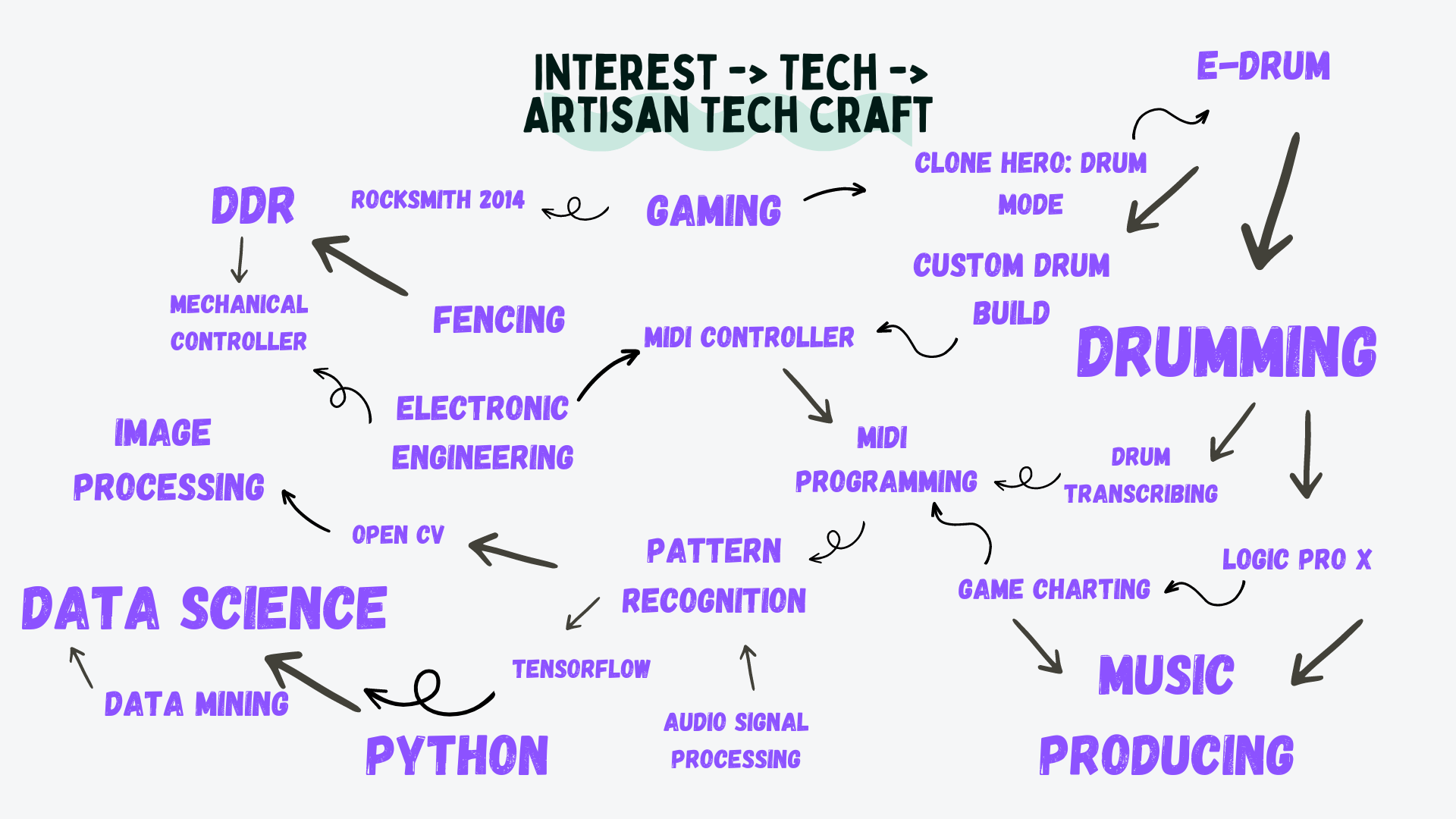
I tried the audio analysis service again to extract sheet music.
The Win: If I knew the exact BPM for a 1-2 minute segment, I could extract hi-hat, snare, and kick data and automate the text-to-MIDI conversion.
import librosa
import numpy as np
from scipy.signal import find_peaks
import matplotlib.pyplot as plt

# 오디오 파일 로드
def load_audio(file_path):
    y, sr = librosa.load(file_path)
    return y, sr

# 드럼 분리 시도 (실패했던 접근법)
def separate_drums(y, sr):
    # 하모닉-퍼커시브 분리
    y_harmonic, y_percussive = librosa.effects.hpss(y)

    # 온셋 검출
    onset_frames = librosa.onset.onset_detect(y=y_percussive, sr=sr)
    onset_times = librosa.frames_to_time(onset_frames, sr=sr)

    return onset_times, y_percussive

# 미디 변환 시도
def convert_to_midi(onset_times, bpm):
    # 이 부분에서 의존성 지옥에 빠졌다...
    pass
For someone who never formally learned drums, self-teaching production tools to get this far felt pretty good. In the first half of 2024, I was obsessed with drum sequencing. Making my own K-Pop drum charts from scratch without anyone’s help was a huge vibe.
Details are here: EN-Retro-Review-Progress-drumgaming-to-producing-and-data-analysis
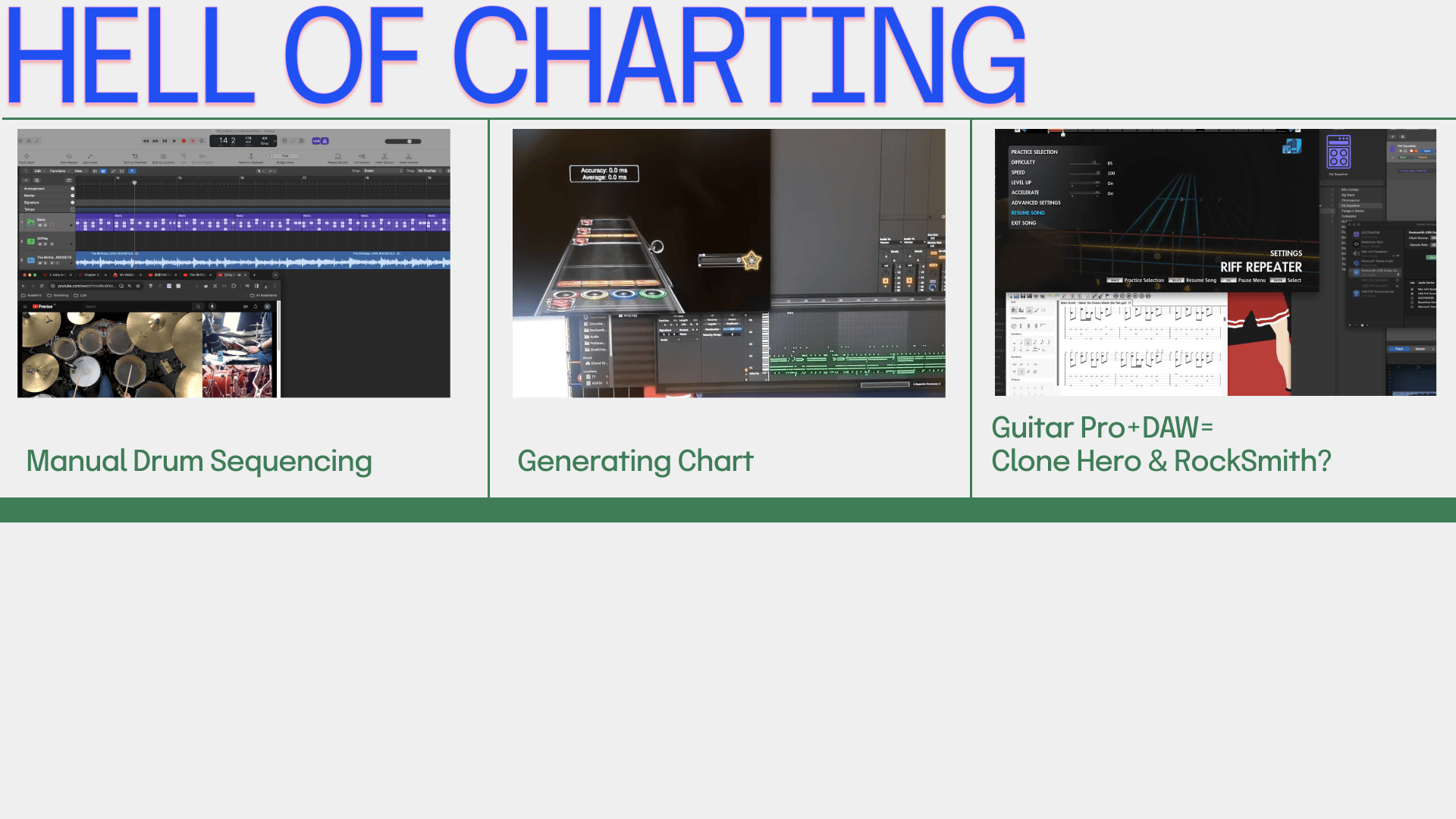
The Unexpected Link: From Drums to Data Science
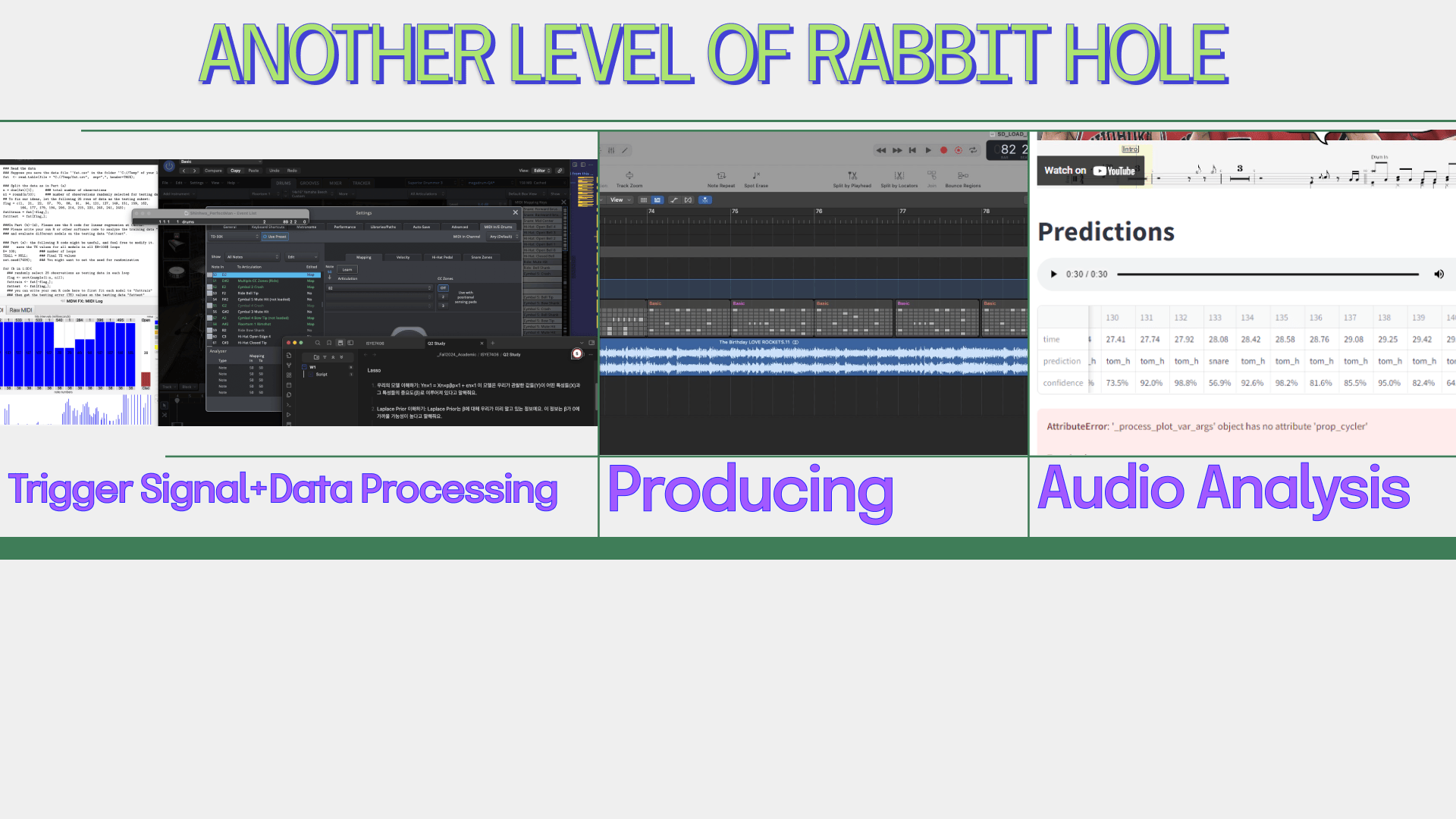
This whole process built my pattern analysis skills—learning how drum beats are built and extracted. I even applied this logic to my drawings (removing lines from scanned notebook sketches). Everything—the drums, the production—started from that one broken $50 kit during the 2021 lockdown.
2022 and 2023 were rough years for me socially and professionally, but these projects helped me overcome that. I grew so much during that time.
Back to Uni: Past Struggles Save the Day
From August to December 2024, I didn’t do much “visible” work because I was back at uni.
But in my Data Mining class, my past “failures” with Python and audio analysis became my secret weapon. While other students were struggling with environment setups, I breezed through because I’d already fought those battles.
# 2024년 하반기 데이터 마이닝 수업에서 활용한 패턴 분석 기법
# 과거 드럼 비트 분석 경험이 여기서 빛을 발했다

import pandas as pd
import numpy as np
from sklearn.cluster import KMeans
from sklearn.preprocessing import StandardScaler

def analyze_patterns(data):
    # 드럼 패턴 분석에서 배운 시간 시리즈 접근법 응용
    scaler = StandardScaler()
    scaled_data = scaler.fit_transform(data)

    # 클러스터링을 통한 패턴 분류
    kmeans = KMeans(n_clusters=4, random_state=42)
    clusters = kmeans.fit_predict(scaled_data)

    return clusters
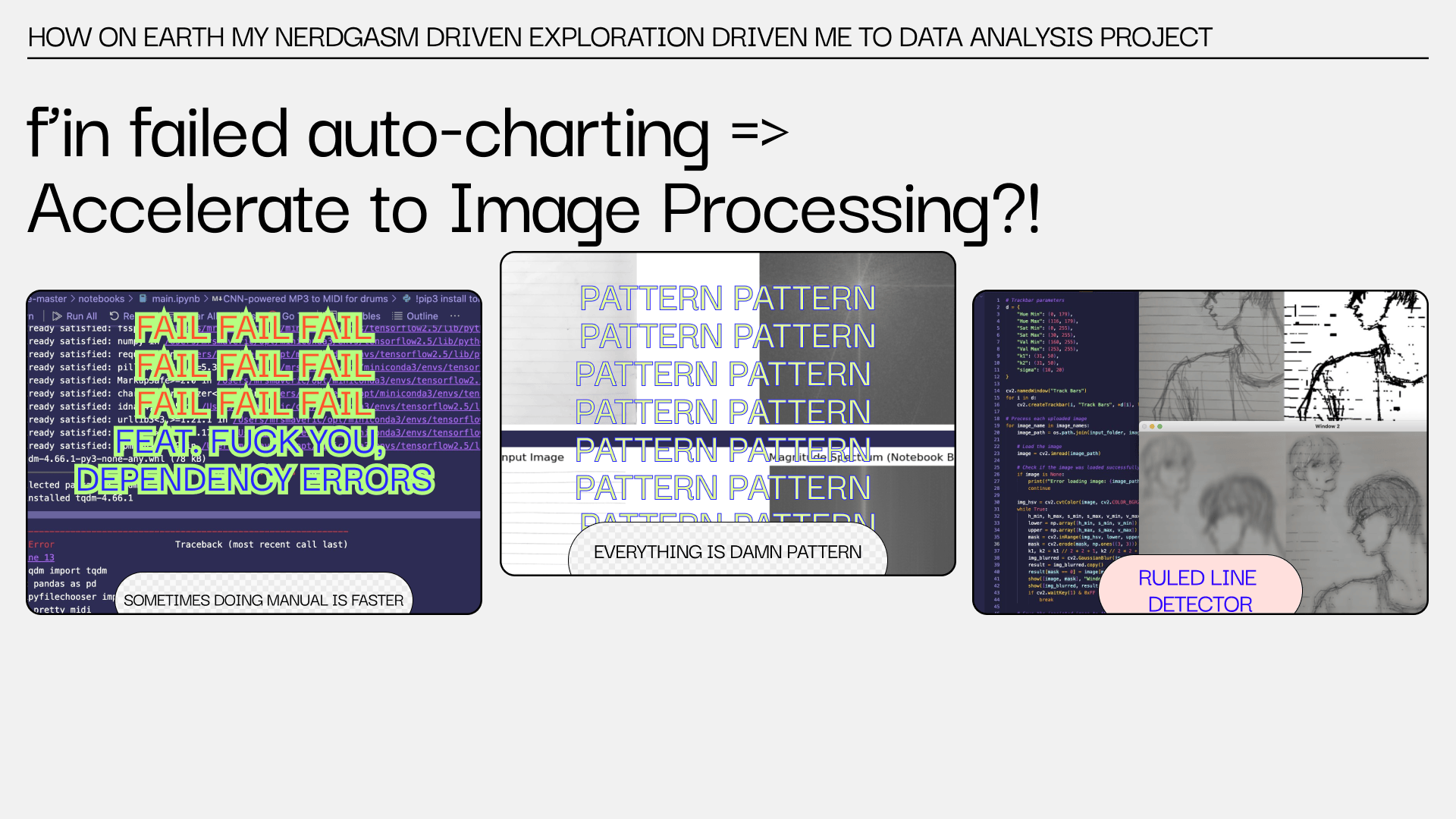
I even ran experiments using Python to distinguish between lined and unlined notebook drawings. Even though it wasn’t perfect, traditional machine learning models actually beat the generative ones. I’ll talk more about that later.
Real Gains from Failure
The Drum Auto-Transcription project was a total failure, but look at what I got:
- Python Env Management: Real-world experience with conda, pip, and venv.
- Audio Signal Processing: Using librosa and scipy.
- Problem Solving: Breaking big problems into tiny, manageable ones.
- Hardware-Software Integration: MIDI comms and hardware control.
- Data Pipelines: Audio -> Text -> MIDI -> Chart.
The most valuable lesson? Don’t try to automate everything. Sometimes manual work is better, and a working prototype is better than a perfect solution.
Current To-Do List
I’m currently working on web animations using the doodles I made in 2023-2024. I’m building a new homepage using GSAP, Three.js, and WebGL. Even though I’m a design/martech engineer by trade, managing the whole pipeline myself is fresh.
Unsolved mysteries:
- Drum latency: Still a bit laggy.
- DDR sensitivity: Still occasional misfires.
- Auto-charting: Only partially working.
But I’m okay with “unfinished” now. The learning is more important than the final product.
Luck Becomes Destiny
Looking back from late 2024, there are regrets. I had periods where I was too depressed to do anything.
But in three years, I’ve achieved all this in fields I’d never touched before. And I did it all alone, without a teacher. That’s my new benchmark.
It all started with one broken e-drum kit. I’m not a pro drummer or a pro producer, but I’m someone who can find a problem and try to fix it. That’s the real win. I want to keep living like this—driven by curiosity, not afraid of failure.
2025 Plans
The dream of my 20s—that art and tech are the same thing—is finally real.
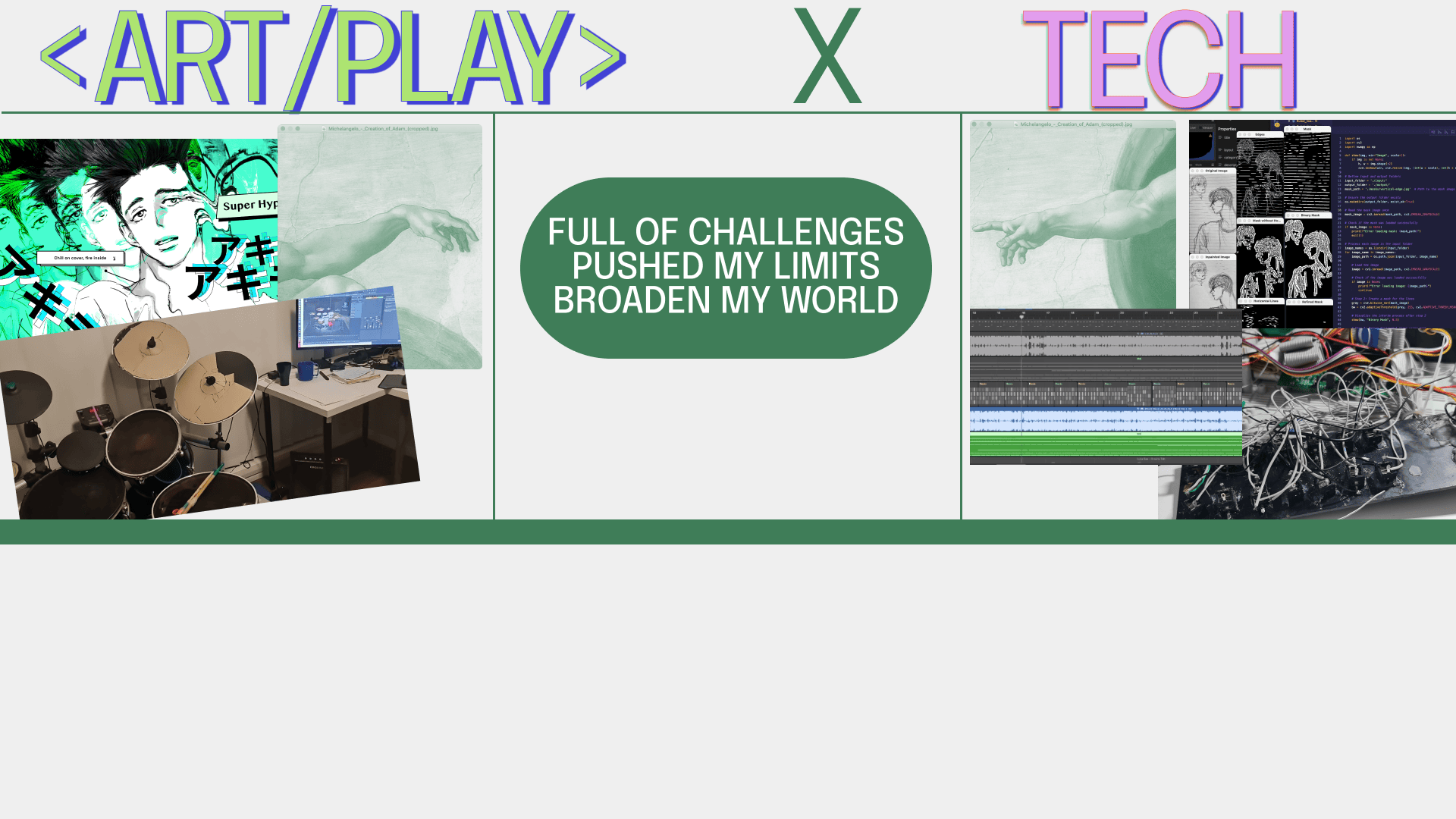
When all the scattered starts finally meet at one point.
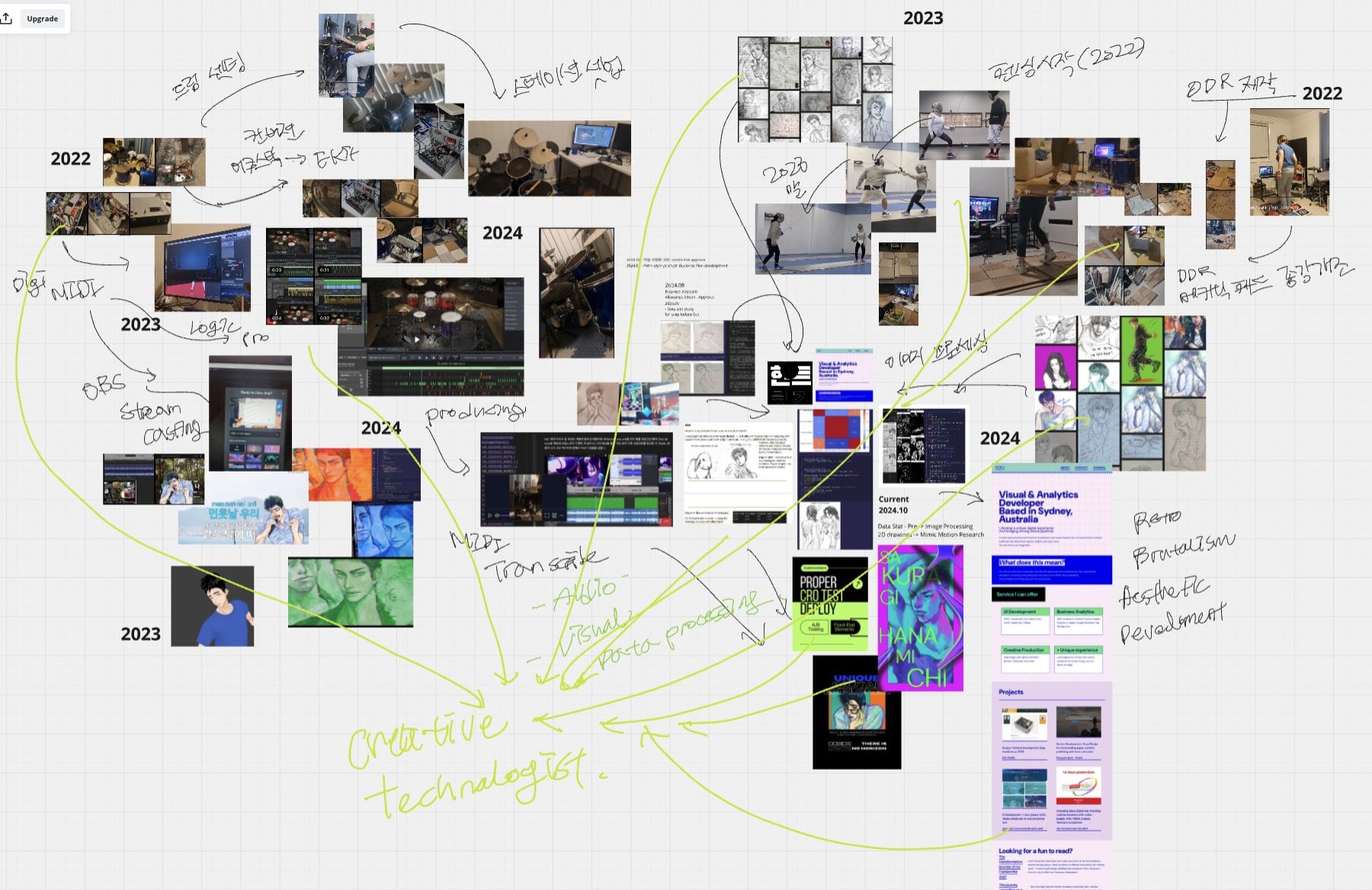
I’m going to focus more on code-based visual expression, like kinetic typography. Web animation is a new challenge—assets, storyboards, sprites. I’ll be exploring GSAP, P5.js, Three.js, and WebGL Shaders.
When the martial law was declared in Korea in 2024, I found out late because I was overseas. I couldn’t join the protests, but I decided to handle political themes in my future work. I’m planning video work using Remotion, data viz, and storytelling journalism on the web.
2025 is about fusing everything: music, programming, data, and design. I want to create interactive art performances that react to sound and movement.
I’m recording narration for a YouTube video for the first time right now. I used to just film random stuff on my phone and upload it—proper low-effort vlogs. But even for those, people leave nasty comments these days asking why I upload “trash.” Since when did Vlogs become about high production value? It used to just be a personal journal.
Anyway, this is all new. I’m starting by telling the story of what I’ve been up to.
In 2025, I’m going to take the seeds I’ve planted over the last three years and grow something brand new. Interactive art, kinetic type, data-driven animation. That’s the goal.
Related Articles
2023-01-02-Wrappingup-first-half-2022-kr 2023-07-25-The summary of 2023.May-kr 2023-07-26-The summary of 2023.June-kr 2023-07-16-my-drumming-journey-2023-jan-to-2023-April-kr